Preferred Provider Networks vs Open Networks
- Home
- Preferred Provider Networks vs Open Networks

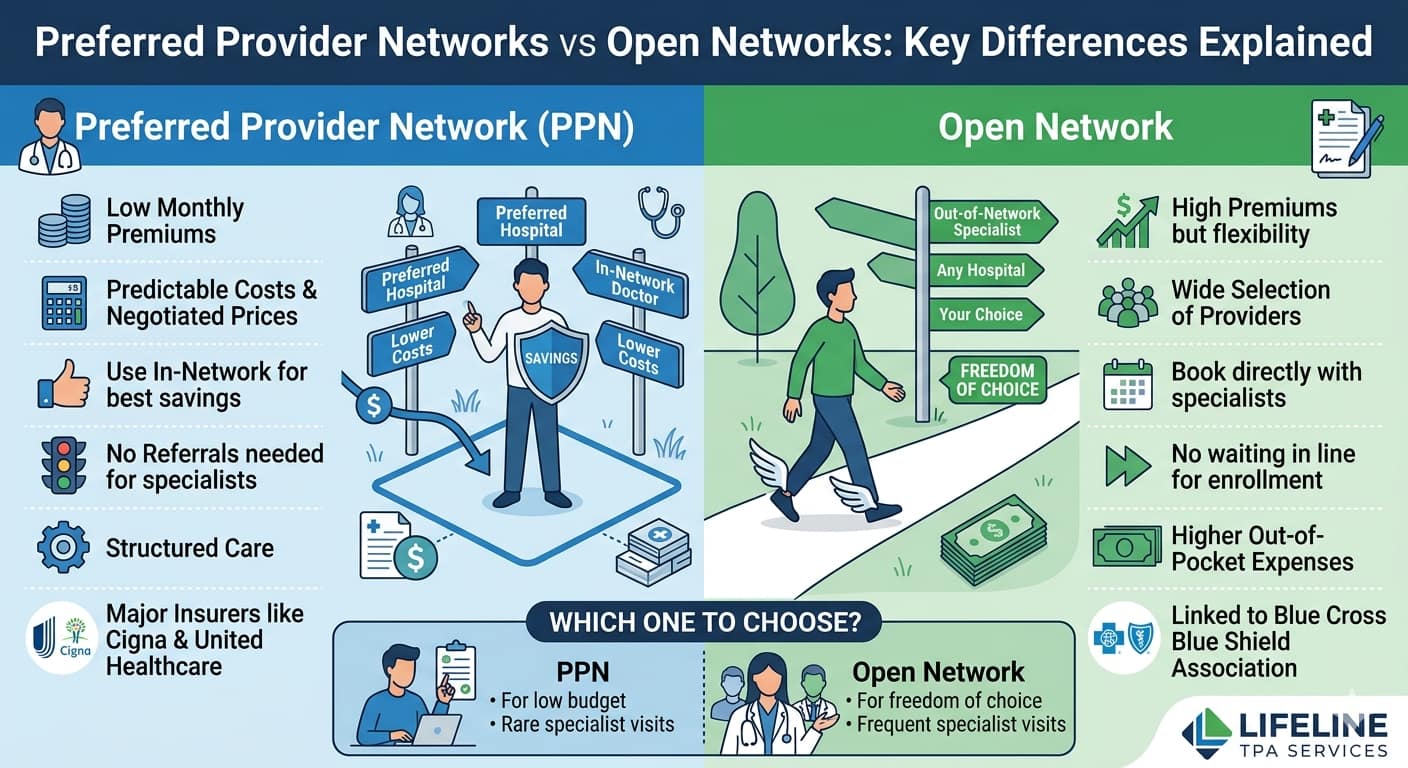
“Preferred Provider Networks vs. Open Networks” are common healthcare terms that can feel overwhelming at first. At first time, they may feel similar, but they are not. They work differently, and these differences are powerful enough to directly affect the costs, doctor’s appointments, and care flexibility. Preferred Provider Networks vs. Open Networks is one of the most common comparisons people make when selecting a healthcare plan.
Certain things help in the practical ways of how you can choose the right TPA services. Not only this, but you can also choose the healthcare services that match your needs. Let’s have a look at what the provider network does.
A network provider is a group of healthcare providers, labs, doctors, and hospital providers. They work with health insurance companies at negotiated prices to provide ease to the patients. Proper insurance networks help patients understand the care costs, control health, and maintain quality standards.
Moreover, network providers provide flexibility in choosing the right healthcare plans. Patient’s ease depends heavily on whether the consultant is outside or inside this network. For easy access, you can have a glance at the member enrollment services.
On the other hand, a preferred provider network is a type of healthcare network that encourages patients to access specific treatments from preferred hospitals and doctors. These providers have agreements to provide health services at pre-negotiated, lower prices.
• This allows you to visit out-of-network providers, but on the other hand, it costs more
• Preferred, or in-network, providers help patients with out-of-pocket expenses
• For PPN, there’s no need for referrals for hospitals and doctors.
• This offers a strong balance between cost savings and treatment flexibility
Preferred network allows you to go anywhere; however, you will be strongly rewarded for using preferred group services. Along with this, many major insurers such as Cigna and United Healthcare provide PPN services.
An open network is also known as an open access plan. It gives patients the freedom to select a desired healthcare provider. These plans are specifically designed to help patients see doctors or specialists without the help of a doctor. In other words, they can have access to out-of-network care directly. Moreover, health plan enrollment empowers patients to book an appointment without waiting in line.
• They provide more flexibility in choosing hospitals and doctors
• They are reducing treatment costs
• Usually comes in higher premiums
• Allows seeing specialists directly
With the help of open networks, patients can have freedom of choice but at higher prices. These plans are associated with larger healthcare insurance entities such as the Blue Cross Blue Shield Association. Understanding preferred provider networks vs. open networks can help patients choose a plan that balances cost, provider access, and flexibility.
Below is a clear comparison that helps to understand things better:
PPN provides lower costs to the patients who stay in the network, while the open network has higher premiums; it provides more flexibility. In most cases, Preferred Provider Network plans are more suitable for a low budget.
PPN is bound to preferred providers only, while the open network offers a wider selection of hospitals and doctors. If you already know a trusted specialist outside of a healthcare provider’s plan, an open network is the right choice for you.
PPN is occasionally needed for doctors, while the open network typically does not require any referral. Open networks help patients to quickly access doctors. Choosing the right network provider services changes the whole game, so choose mindfully.
Healthcare insurance plans are covered by PPN, but still they are more expensive. On the other hand, an open network provides partial coverage, but it has fewer restrictions compared to a preferred provider network.
PPN helps in offering structured care and savings while the open network prioritizes convenience and flexibility. This is one of the biggest trade-offs between the open network and PPN.
When comparing preferred provider networks vs. open networks, the right choice depends on your healthcare needs and lifestyle. If you want lower monthly premiums, rarely require specialist visits, or want predictable costs, choose a preferred provider network. However, if you want freedom to choose a doctor, frequently visit specialists, or prefer convenience over costs, choosing the open network is the right choice.
Meanwhile, Lifeline TPA Services offers easy access to any healthcare plan with your preferred provider. Understand the differences between all network providers to avoid costs and choose the insurance plans that fit your lifestyle and needs.